
(Courtesy/Instagram @familiesofmosiac_ca)
Dr. Evelyn Carter ‘06 stood on the first platform of a zip line tour on Catalina Island, California, and decided she wasn’t going to do it.
The trip had been her idea, a birthday surprise for her mom, who loves anything involving heights. But once Carter got to the top, her stomach dropped. She watched her husband go, then her mom, and she seriously thought about climbing back down.
In the end, she stepped off. Why she did it is the heart of her work.
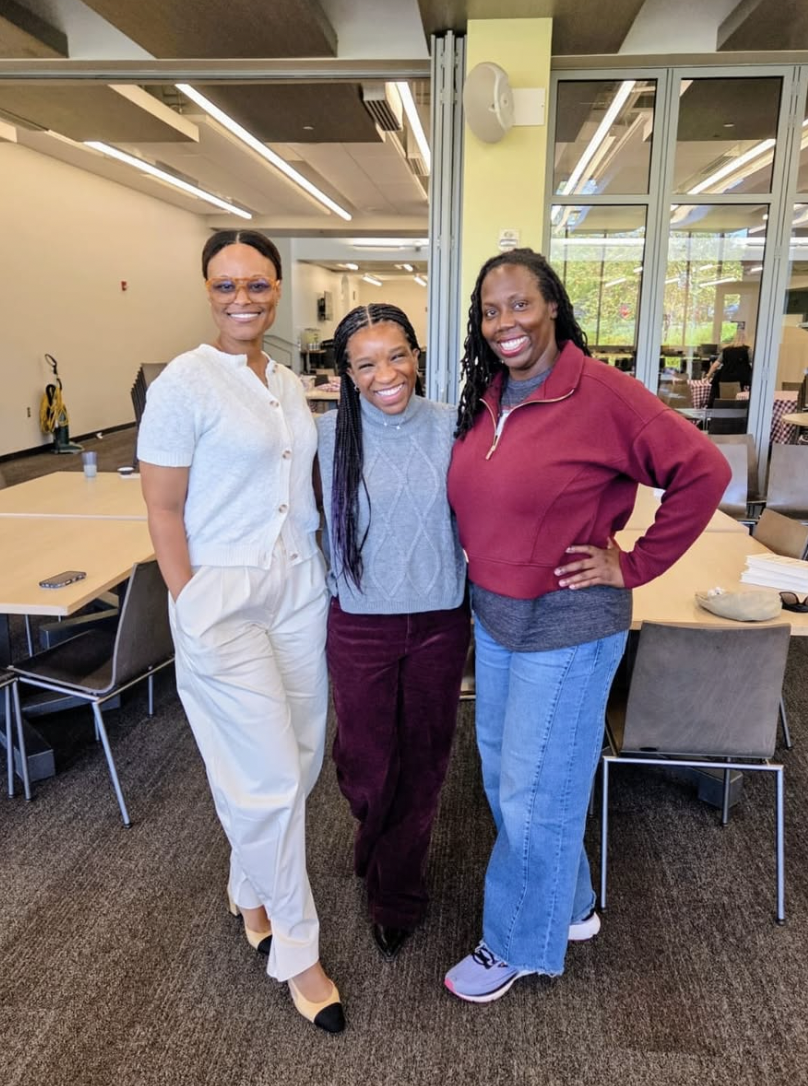
Carter told that story on Friday, October 9, at the Fireside in the Dining Hall, during a moderated conversation about her book, Was That Racist?: How to Detect, Interrupt, and Unlearn Bias in Everyday Life. She opens a chapter of the book with the zip line because, she said, conversations about racism feel the same way. Saying yes is easy. Actually sitting in the conversation, with sweaty palms and a racing heart, is something else.
What got her up the tower was wanting to make her mom happy. What got her off the platform was knowing she’d be disappointed in herself if she turned around. Carter explained that pressure from other people can get someone into the room, but only a personal reason will keep them there when things get uncomfortable. That’s why the first question she asks every client is, “What is your why?”
For Carter, that why began at Academy.
She hadn’t been back to campus in about 20 years, and she visited during her 20th reunion weekend with her husband and daughters. She laughed that she “wasn’t a cool kid” in high school, so walking the halls now felt like reclaiming the territory. She also remembered being a freshman when there were fewer than ten Black students in the upper school. She and a few classmates started meeting at lunch in a teacher’s classroom just to be together. Looking around campus now, she said it was amazing to see how much has changed and to think she might have played a small part in it.
Academy was also where she fell in love with writing. She remembered an English class where students looked up the original meanings of words in the Oxford English Dictionary. “This is why I love words, this is why I love writing,” she said. “But it really started here.”
Still, she didn’t leave Academy planning to write books. She wanted to be a plastic surgeon. Then at Northwestern, pre-med classes were a struggle, and she switched to psychology. Years later, she read about stereotype threat, the research showing that worrying about confirming a negative stereotype about your group can hurt your performance. She said it “explained my entire experience at Northwestern.” That research had been around since before she was in high school, and no one had ever told her about it.
That was when she found her why. Carter didn’t want anyone else to go through what she had without knowing why, so she started taking her research out of academic journals and sharing it with schools and companies as a consultant.
The same goal came through when the audience asked questions. One person asked what people can do when they’re exhausted from always being the one to explain bias. Carter told them to “give yourself a break,” because fixing bias isn’t their job alone, and to find one trusted person in the room who notices what they notice. She also told a story about a white friend who once felt out of place as the only man in a meeting. When he asked her whether that was how she felt all the time and she said yes, and he finally understood. “I want more people to have that ‘oh’ moment,” she said.
Carter admitted that doing this work has gotten harder in recent years, but she isn’t giving up. She closed with the Martin Luther King Jr. quote that ends her book about the arc of the moral universe bending toward justice. Many people think it means things will get better on their own, she said, but that isn’t what King meant. “He meant that we are the ones that bend the arc.”
It’s a little like standing on that platform in Catalina. It can be scary, and turning around would be easier, but Carter’s message to students was to find their why and step off anyway.