
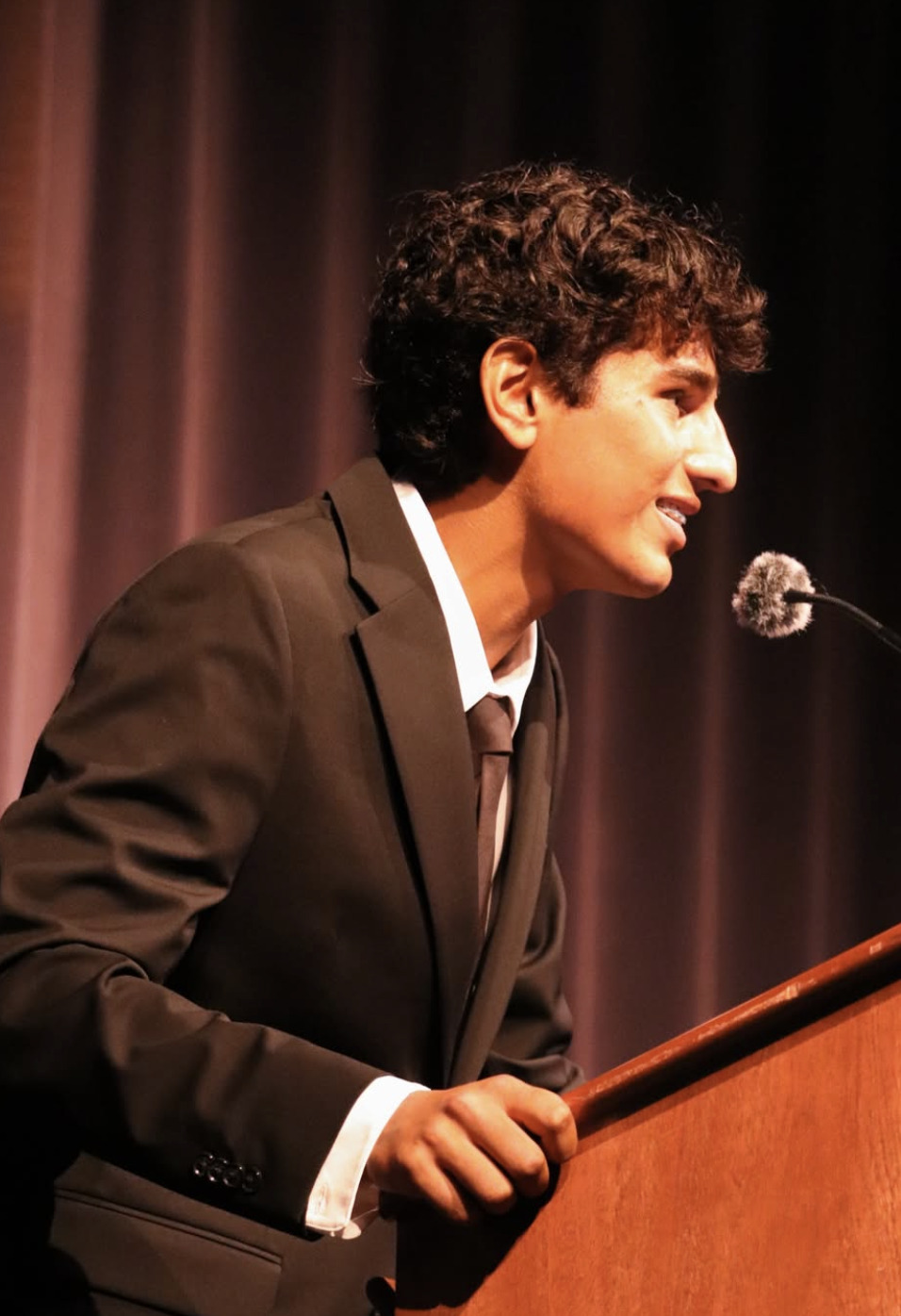
The air in our Schoedinger Theater buzzed with excitement as the upper school and faculty filed into their seats. Illuminated by an outstanding spotlight, four chairs and a podium sat on stage. The audience animatedly discussed homework, tests, and the weekend, unaware of four nervous students hidden backstage. While similar Thursdays will occur every week, this one is special. On September 3, Ronak M., Gabe K., Claire H., and Sydney A-L. kicked off another year of successful Junior Speeches.
As an audience, we see polished and poised speakers, but on the drawing board, careful planning is required. Preparation starts as early as sophomore year. “They do something called the topic exercise where they do brainstorming on that, and I pick out which topic I think they should do for their speech,” says Academy’s Junior Speech Director, Ms. Seymore. “The first three weeks are drafting our speeches and getting a lot of my feedback, and then in the last three weeks, we shift into the theater, and that’s where they are practicing [the delivery] of their speeches.”
This year’s first speaker, Ronak, discussed losing his curiosity as he got older and the importance of still asking questions. In my interview with him about the process, he said, “I practiced a lot at home. I would just record myself and say my speech lots of times.”
Similarly, Gabe, who stressed the significance of drinking water after a critical experience of passing out from dehydration at seven, said, “Ms. Seymore was really helpful. We’ve worked since the beginning of June. We’d have speech practice like twice a week.”
Before students were allowed to choose their own topics, Academy’s speeches included quoted Bible passages and memorized research talks. “Now,” says Seymore, “my biggest role is to make sure they’re delivering a speech they care about, they’re confident in their voice, and they’re confident when they get onstage.”
Claire took this advice to heart and spoke about discovering herself through working at the Farmers Market and the Sweet Ghost bakery. As the third child with an older brother, Claire felt pressured to follow in his footsteps. “But this last summer and the past few summers,” she explains. “I’ve kind of found my own place, a farmer’s market, so I just really wanted to encapsulate that.”
The final speaker, Sydney, talked about her younger cousin Joshua and Joshua Alert, an Amber Alert-like system designated to locate a missing child with autism or another developmental disability. She spoke about her nonverbal autistic cousin, who had gone missing. “They found him. He drowned,” Sydney says. “And since then, with bipartisan support and the supportive community, there will now be a Joshua alert.”
As the speakers stepped offstage, applause thundered throughout the theater, and a line quickly formed to congratulate the juniors. All four admitted that speaking to an audience of 500 people was challenging, but at the same time, rewarding. “Being on stage is obviously more nerve-wracking and frightening,” says Ronak. “But I mean, it’s really not that bad. You kind of just like ease into it. When you’re stuck up on the podium, it’s a little scary. [But] when you start talking for the first minute, then you’re good.”
The “why” in this hundred-year tradition stretches far beyond a graduation requirement. “I hear so often from our alumni that when they go to college, they have to do presentations, they have jobs in the world, or they’re presenting to their colleagues, they’re just really confident speakers,” explains Seymore. Students learn not only how to write a speech, but also how to project their words with purpose.
“I didn’t know how to speak in front of a large audience,” said Ronak. “It was good preparation for just lots of public speaking in my life.”
Claire added how impactful the process was, “I think my biggest takeaway was like I sort of learned not to be afraid to be who I am. I didn’t fully even understand all of this until I started putting it on paper.”
It is truly a special moment when the entirety of upper school gathers to support one speaker. “Hopefully, there’s a message in at least some of the speeches that resonate with you, as an audience member,” said Seymore. “It’s hard to get on stage and share something personal or [something] you care about”.
Sydney’s advice is to “manage your time well, but also just enjoy it because it’s over now.”
When asked if they would repeat their junior speeches, the first group unanimously answered “Yes”.