
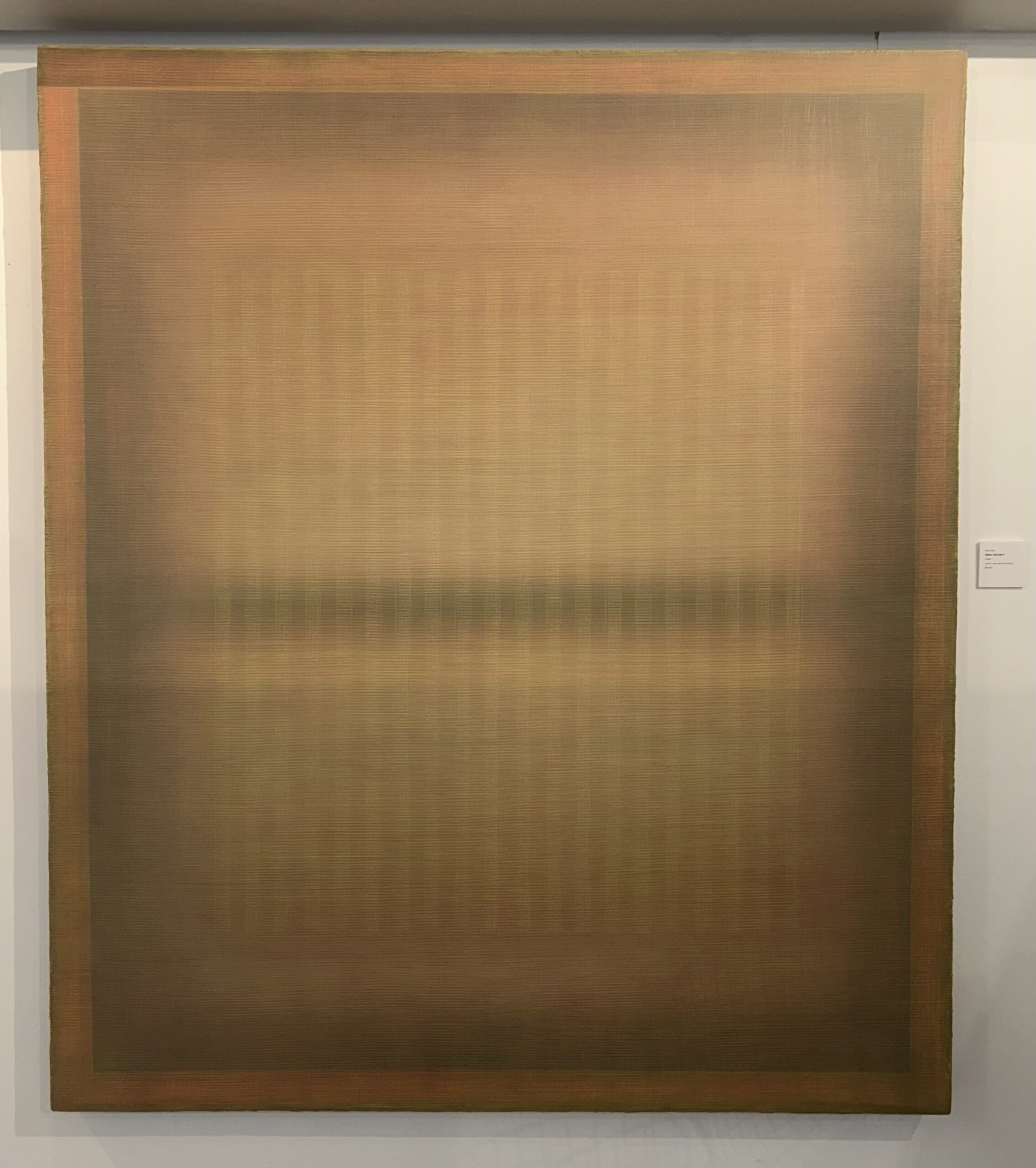
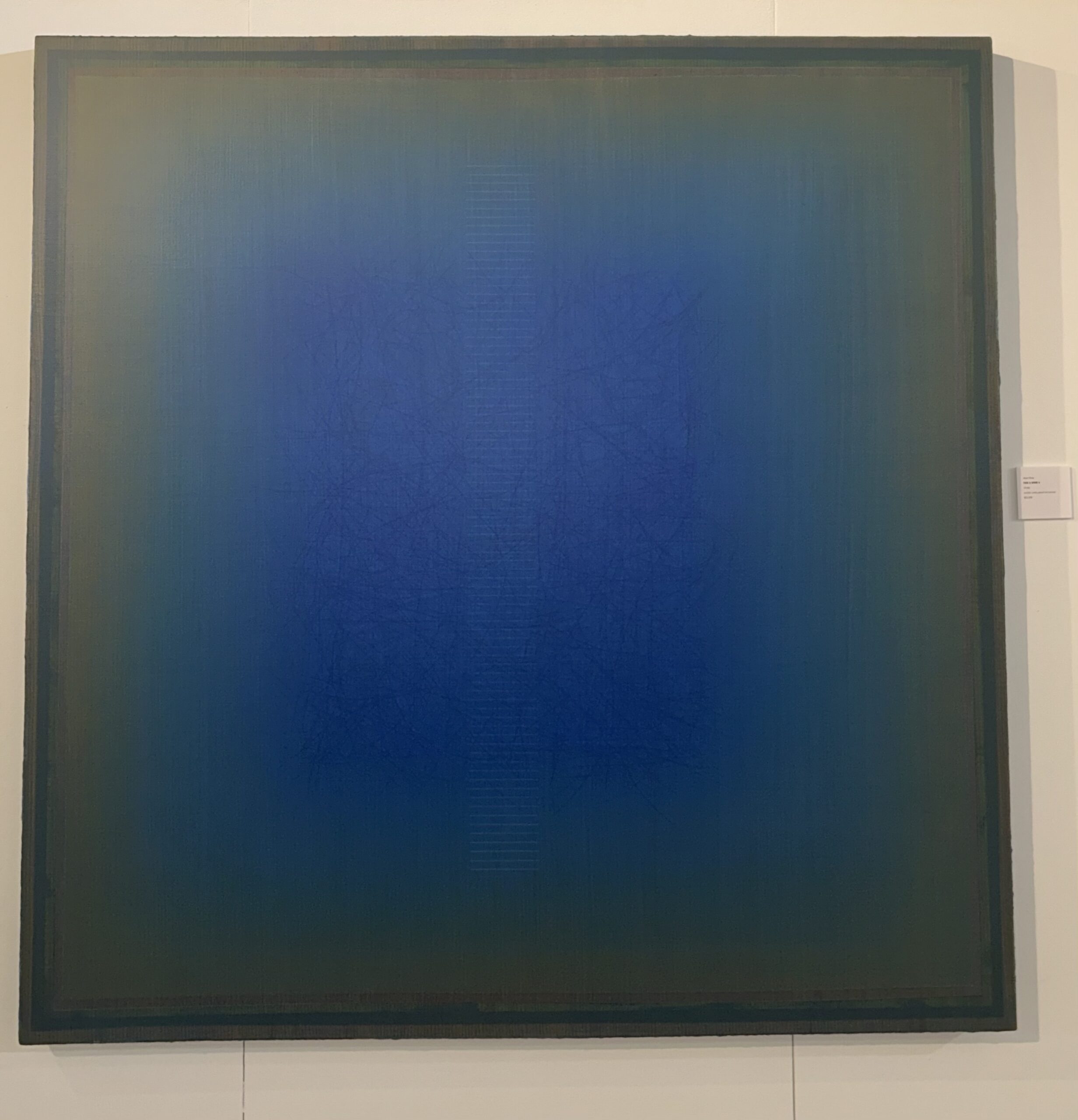
Large, bright canvases line Morris Hall’s walls, filling Academy’s art gallery with layers of vibrant colors and pigments. But beneath the abstract surfaces of Mark Ross’ work are stories drawn from world events.
The current exhibition came together through a collaboration between Sarah Gormley, who sells contemporary art on High Street and upper school art teacher Ms. Tursich, who visited her downtown gallery to explore potential partnerships outside of our campus.
Gormley suggested featuring Mark Ross, both an artist her gallery represents and a former Gahanna City Schools art educator. Gormley, a longtime art collector, wanted to dedicate an exhibition to Ross, whom she felt needed more opportunities to feature his work.
Tursich’s first introduction to Ross’s work occurred when she noticed a lime-green painting of his in the back room and found herself drawn toward it: “As I was standing there, I just kept staring at it. I was completely intrigued and encapsulated by this piece and its layers. I just wanted to stand and stare at it for the longest time.”
That attention to layers is characteristic of Ross’ work. He has showcased his paintings at the Cleveland Museum of Art, the Klutznick National Jewish Museum in Washington, D.C., the Southern Ohio Museum, and other galleries across the country. His style comes from two decades of developing a layered approach to color and texture, resulting in the intricate, large-scale compositions, several of which are on display in Morris Hall.
His paintings contain details that can be difficult to notice from across the room, while raw edges of the canvases expose numerous layers of pigment underneath the surface. Tursich described the exhibition as “museum quality,” citing Ross’ scale and attention to detail.
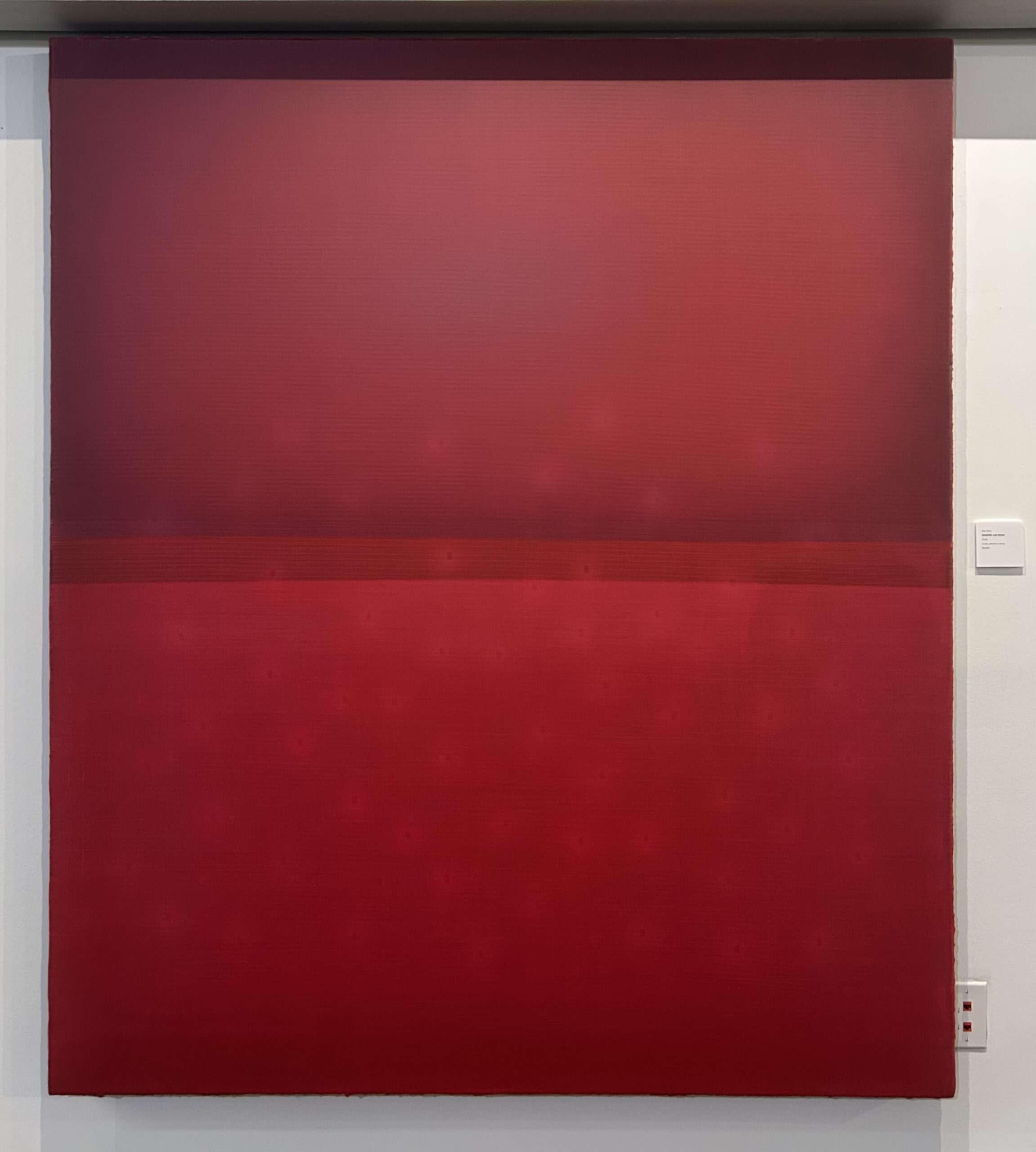
From a distance, the paintings may seem simple, but they contain stories and details hidden beneath their vibrant layers of color. Ross’ pieces are emotional responses to events around the world.
For example, Wheatfield Envy responds to the Russian invasion of Ukraine and the destruction of its wheat fields, with a golden-yellow sky above them. Ghosted Las Vegas responds to the 2017 Las Vegas mass shooting, with small, dark rectangles scattered throughout the red paint, representing those killed or wounded in the attack.
Viewers would not recognize these connections by simply looking at the paintings from afar.
“Those are two great examples of exactly where he’s coming from with these,” Tursich said. “But if you just look at it, you wouldn’t see that.”
Ross has said he wants his paintings to create a feeling of calmness. The contrast is notable: some works respond to disturbing events, yet their abstract surfaces appear meditative when viewed from a distance. Details nearly invisible across the gallery emerge when viewers move closer, changing the way the paintings are experienced.
For Academy, however, art exhibitions in Morris Hall are about more than hanging professional artwork for students and faculty.
Academy hosts four gallery exhibitions each year: two featuring student work and two featuring outside artists. Bringing professional artists to campus allows students to discover work created beyond the school community and, in some cases, engage with the artists themselves.
“We’re trying to give our students an experience they’re not going to get anywhere else,” Tursich said. “When we’re teaching art, we want to look at art too, and [we hope] students can engage with artists directly.”
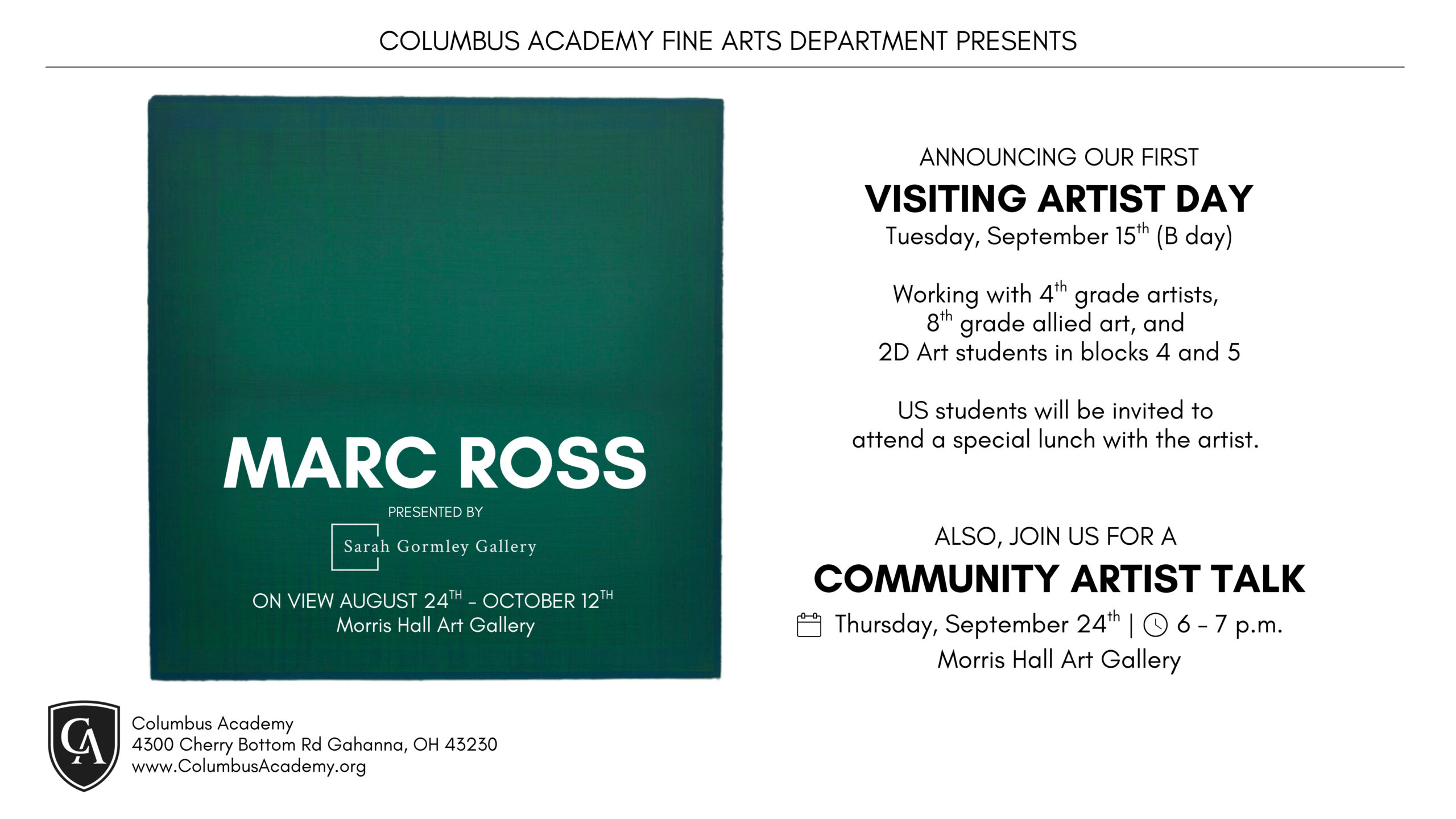
Following this theme of engagement, Ross will visit Academy to work with fourth-grade and eighth-grade art classes and the upper school 2D art classes. He will also host a community artist talk in the gallery on Thursday, September 24 at 6 p.m., when students, families, alumni, artists and other community members can discuss his work.
For students walking through Morris Hall, the exhibition offers more than an opportunity to see contemporary art. The paintings invite viewers to look closer and to notice the layers, details and stories that are easy to miss from far away. In doing so, the gallery becomes a place not only to view art, but to encounter the ideas and experiences behind it.
“We really try to have this holistic approach where students not only get to see artwork but hopefully engage with the artist,” Tursich said. “We want to have a richer, more robust experience in the arts.”