

(Wikimedia Commons)
In 1947, amidst the Cold War, the Bulletin of the Atomic Scientists created the Doomsday Clock to representhow close humanity was to self-destruction. While the clock initially only took into account the threats of nuclear warfare, in 2007, the clock’s overseers factored in other global catastrophes like climate change, political instability, pandemics, and disruptive technologies.
The clock operates like a countdown, with twelve o’clock signifying “Doomsday,” with the clock’s hands adjusted every year to reflect how close humanity is to collapse. On January 27, the Bulletin gathered for its annual setting of the clock, and to humanity’s dismay, we are now just eighty-five seconds away from twelve o’clock, and closer than ever before to global destruction.
The question that is stumping a few, yet blatantly obvious to others, is why the world is only now coming so close to global catastrophe? One of the most noted reasons was the upcoming expiration of the New START Treaty between the U.S. and Russia. If both countries do not choose to renew the agreement, it will be the first time in over five decades that neither party has had legal limitations on the deployment of nuclear weapons. The ordeal has garnered speculation that, without controls on two of the world’s largest nuclear arsenals, the U.S., Russia, and other countries will be more compelled to use their own nuclear arms during periods of contention with other nations.
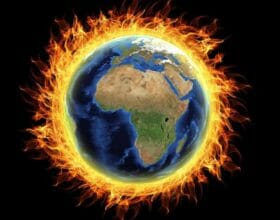
Besides nuclear warfare, the shifted hands on the Doomsday Clock are also a result of persistent climate issues in the world, like plastic and waste pollution, increased weather event severity, rising global temperatures, and biodiversity loss, all of which are being exacerbated by human overconsumption and a lack of environmental consideration. Despite proposed environmental solutions, the scale of the climate crisis makes it a gargantuan problem to resolve and one of the greatest threats to our world today.
One of the more recent and pressing contributors to the current state of the Doomsday Clock is AI. Scientists note that the AI industry is a major contributor to the global strain on natural resources, one of the key causes of job displacement worldwide, and a source of false or biased information. As industries and student populations become more reliant on AI for supposedly “fast and accurate” information or alleged “cheap and efficient” labor pools, the human population continues to suffer, pushing us closer to the point of global catastrophe.
Despite the reality of the Doomsday Clock, its creation was not for the sole purpose of scaring humanity with grave predictions. Instead, the eighty-five-seconds that are now left before the clock strikes midnight can serve as a signal of hope that there is still time for humanity to turn things around before it is too late.